

“Lack of aviation fuel in Havana forces international airlines, including Russia’s Rossiya, to seek technical stopovers in the Atlantic”
The recent energy crisis that hit Cuba has caused a red alert in the international civil aviation sector. Due to the severe shortage of Jet A-1 fuel at major Cuban airports, local authorities issued a NOTAM (Notice to Airmen) informing of the unavailability of refueling for international flights between February 10 and March 11, 2026. This situation has forced airlines to redesign their transatlantic routes, placing Cape Verde, and specifically the island of Sal, at the center of logistical solutions.
The impact on international routes Many airlines, especially Canadian carriers such as Air Canada and WestJet, have opted to temporarily suspend their operations to the Caribbean island. However, other long-haul operators are attempting to maintain connections through additional technical stopovers. The aim is to allow aircraft to land in Cuba with enough fuel for the return journey or to refuel at intermediate points before or after passing through Cuban territory.
The choice of Sal Island The Russian company Rossiya, a subsidiary of Aeroflot, which operates frequent flights between Moscow and destinations such as Varadero and Havana, is one of the companies that seriously considered using Amílcar Cabral International Airport on the island of Sal. Given its privileged geographical location in the middle of the Atlantic Ocean, Sal emerges as one of the few viable alternatives, alongside the Bahamas or Bermuda, to ensure the operational continuity of these long-haul routes during the crisis in Cuba.
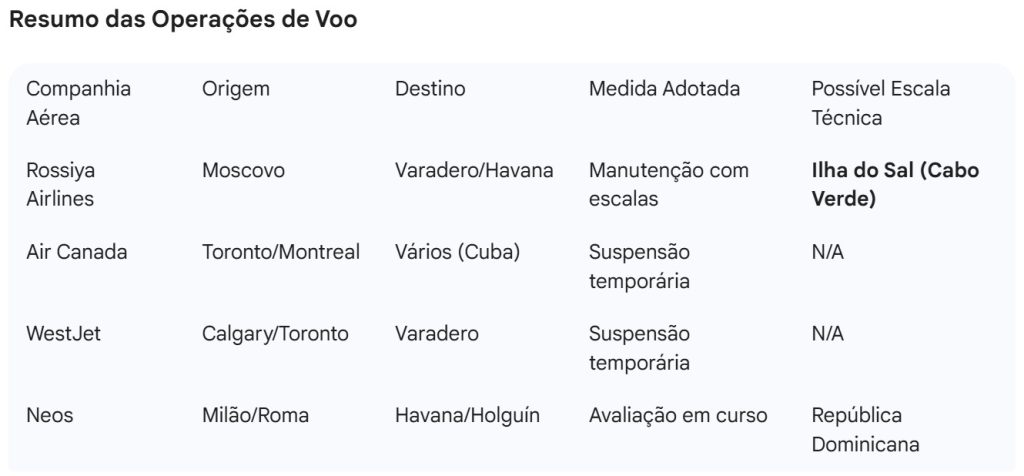
Who is Rossiya Airlines? Rossiya Airlines is one of the largest and oldest airlines in the Russian Federation, based in St. Petersburg. It is part of the Aeroflot Group and operates an extensive network of domestic and international destinations. The company is known for operating large aircraft, such as the Boeing 777, and is a key player in transporting Russian tourists to the Caribbean, a route that now critically depends on technical stops for refueling.
Cape Verde's role in air logistics The use of Sal as a technical stopover is nothing new, but it reinforces Cape Verde's importance as a safe and efficient logistics hub. For the local economy, this sudden increase in demand for airport services and fuel sales represents an opportunity, although it depends on the evolution of the political and energy crisis in Cuba. It remains to be seen whether airlines will be able to cover the operating costs of these additional stopovers or whether they will opt to suspend services entirely until March.
Cape Verde 24.info
Source: Corriere della Sera, Interfax, International Aviation Agencies.
Editorial Note: Information on technical stopovers is based on contingency operational plans and may be subject to change in accordance with the safety guidelines of the airlines themselves and the civil aviation authorities of Cape Verde.
It should be noted that this emergency situation stems from an official warning from the Cuban government, which declared its inability to supply jet fuel from February 10 to March 11, 2026, affecting hundreds of flights per week.